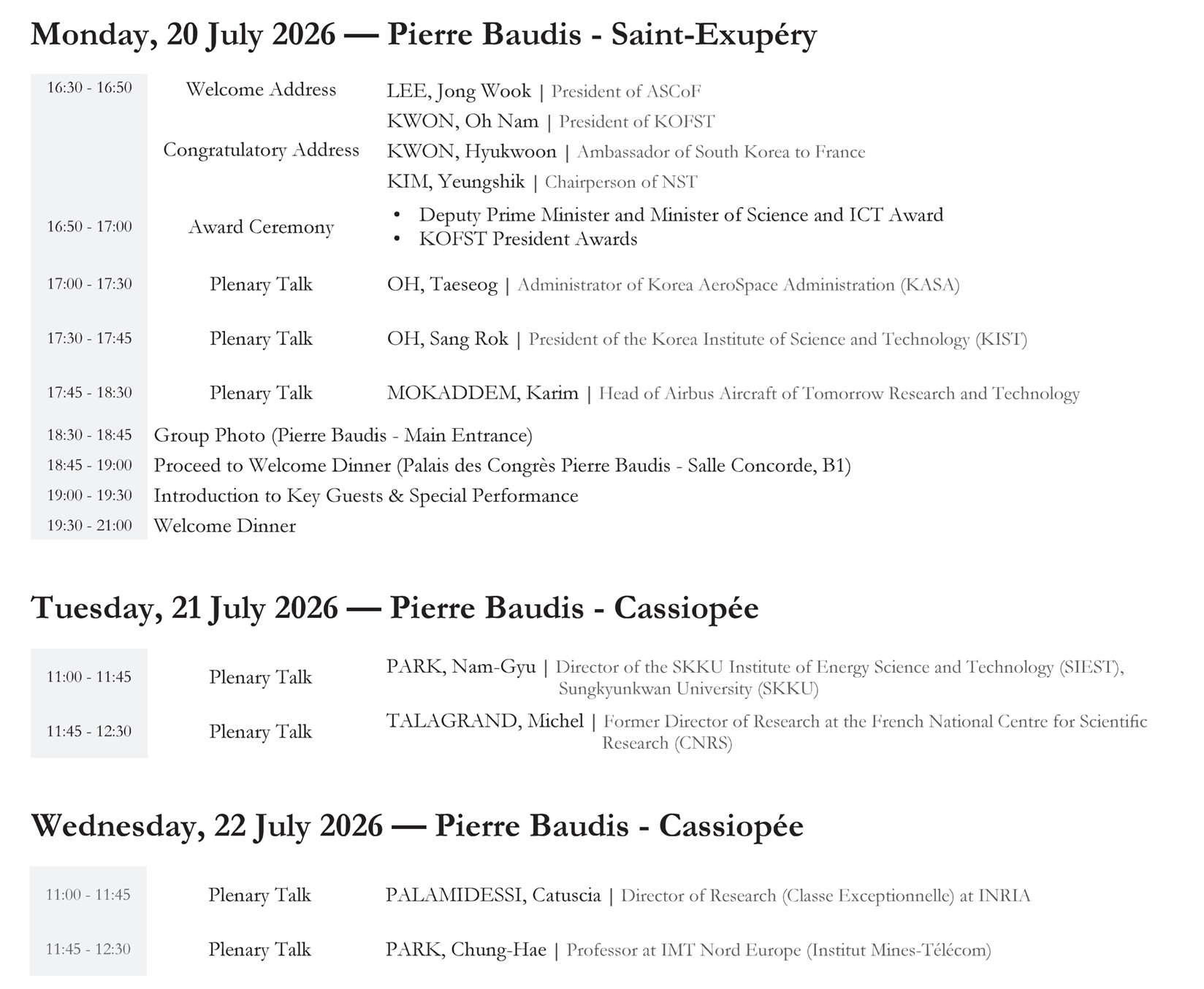
PROGRAMME
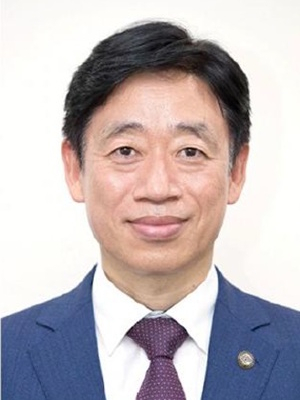
Oh, Taeseog
Administrator of Korea AeroSpace Administration (KASA)
Biography
Administrator Oh assumed leadership of the Korea AeroSpace Administration (KASA) on February 2, 2026. Prior to this role, he served as the President of the Korea Institute of S&T Evaluation and Planning (KISTEP) and held the prestigious post of First Vice Minister of the Ministry of Science and ICT (MSIT).
With a career spanning over 30 years in public service since 1992, he has been a key architect of Korea’s national R&D and innovation strategies. His extensive international background includes serving as a science and technology policy expert at the OECD Secretariat in Paris and as Consul General at the Embassy of the Republic of Korea in India.
Beyond his administrative leadership, he has contributed to academia as a professor at Sogang University’s Graduate School of MOT. His professional portfolio encompasses Innovation Policy, Economic Security, and Strategic Technology.
He holds a Bachelor’s degree in Economics from Seoul National University and a Master’s degree in Technology and Innovation Management from the University of Sussex, UK.
Plenary Talk Title: Korea’s New Horizon – Space as a Core Engine for National Growth
Driven by the "New Space" shift toward private-led commercialization and downstream data services, Korea has designated space as a top ten national strategic industry. To transition into a global space powerhouse, the newly established Korea AeroSpace Administration (KASA) serves as a flexible, expert-centred control tower, building upon the technical milestones of the indigenous Nuri rocket and Danuri lunar orbiter to orchestrate a self-sustaining commercial ecosystem.
Looking ahead, Korea’s comprehensive framework targets a lunar landing by 2032 and a Mars landing by 2045. On the industrial front, the government is exponentially scaling its New Space Fund, establishing specialized regional aerospace clusters, and developing next-generation reusable launch vehicles by 2035. Concurrently, KASA is driving technical sovereignty by advancing space situational awareness (SSA) capabilities and catalyzing a high-value satellite data economy.
Recognizing that these ambitions cannot be realized in isolation, Korea is actively expanding its international diplomacy. Through deep partnerships with NASA including CODEX, SPHEREx and CLPS, active multilateral engagements within UN COPUOS, and expanding strategic frameworks with the European Space Agency (ESA), Korea is positioned to serve as a responsible, long-term partner in shaping the global space economy and exploration horizons.
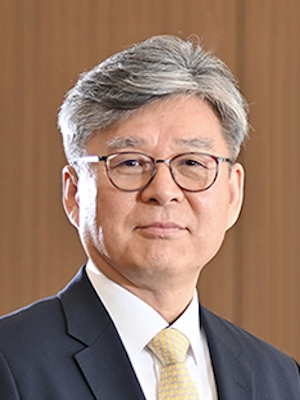
Oh, Sang Rok
President of the Korea Institute of Science and Technology (KIST)
Biography
Dr. Sang Rok Oh is the President of the Korea Institute of Science and Technology (KIST) and a pioneering figure who has shaped the landscape of robotics and intelligent systems in South Korea for over three decades.
After receiving his B.S. from Seoul National University in 1980, Dr. Oh completed his graduate studies at the Korea Advanced Institute of Science and Technology (KAIST), earning his M.S. and Ph.D. in Robotics Engineering. As a leading scientist at KIST, Dr. Oh dedicated his early career to breaking new ground in intelligent and service robotics. His profound expertise in the field led to him being appointed as the President of KIST in 2024, steering the nation's first and premier government-funded research institute in innovative new directions.
Among his various research accolades, Dr. Oh is widely recognized as a chief architect of South Korea's national robot initiatives. During his pivotal tenure as the Project Manager of Intelligent Service Robots at the Ministry of Information and Communication, he pioneered the visionary concept of the "Ubiquitous Robotic Companion," successfully shifting the paradigm of robotics from industrial automation to human-centric service applications. His strategic leadership also extends to national governance, where he works closely with the Ministry of Science and ICT (MSIT) to chair key committees shaping national infrastructure and core technology policies. Reflecting his high standing in the scientific community, he has also served as the President of the Korea Robotics Society.
Plenary Talk Title: KIST's Vision Beyond 60 Years: Mission-Oriented Research for the Future
For the past six decades, KIST has served as Korea's first government-funded research institute, playing a pivotal role in driving national industrialization, advancing science and technology innovation, and strengthening Korea's global competitiveness.
This keynote will reflect on KIST’s achievements and challenges while presenting its vision for the future. The presentation will highlight KIST’s mission-oriented research framework, which aims to address national priorities and create societal impact beyond scientific excellence. It will introduce KIST’s strategies in key areas including AI and robotics, next-generation semiconductors, climate and environmental technologies, brain science and other fields critical to Korea’s future competitiveness.
The keynote will also discuss KIST’s efforts to accelerate innovation through the introduction of a Program Manager (PM) system, new research management practices, and a mission-focused research environment.
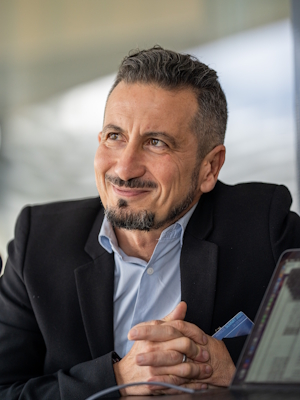
Karim Mokaddem
Head of Airbus Aircraft of Tomorrow Research and Technology
Biography
Karim Mokaddem is Head of Airbus Aircraft of Tomorrow Research and Technology. He joined Airbus in 2020 as VP Airbus Group Electrification Roadmap leader and became VP Hybrid Electric Strategy at Airbus in 2022.
Karim has held a variety of engineering, project leadership and management positions since starting his career in 1996. During his 14-year tenure at PSA Peugeot Citroen, he held several high-level roles, including Executive Chief Engineer of Technoboost, a joint-venture between PSA Peugeot Citroen and the French government.
In 2014, he was named General Manager of AALPS Capital, an asset management company in low-carbon, hydrogen and fuel cell mobility. Prior to joining Airbus in 2020, he was Chief Technology Officer of Balyo, a company that develops, markets and installs fully autonomous material-handling robots.
Karim holds a Master of Science degree in mechanical engineering, a PhD in Physics, and a MBA from London Business School. He is the author and co-author of many technical papers and patents, and has been internationally awarded for his work.
Plenary Talk Title: New Generation Aircraft Technologies
Airbus is committed to contributing to meet the Paris Agreement targets and leading the decarbonisation of the aviation sector in full collaboration with all stakeholders. We are convinced that carbon-neutral aviation is not only possible, but achievable within our lifetime.
As there are no silver bullets to decarbonisation, we are developing a multifaceted action plan for commercial aircraft. This includes a focus on sustainable aviation fuels (SAF), Air Traffic Management (ATM) solutions and more importantly, improving aircraft performance.
This talk will explore the different technologies that Airbus is actively researching on, including wings design, more efficient engines, lighter materials and the introduction of the software-defined aircraft.
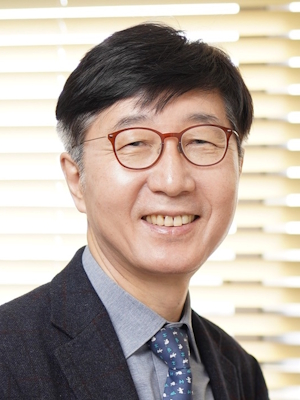
Park, Nam-Gyu
Director of the SKKU Institute of Energy Science and Technology (SIEST), Sungkyunkwan University (SKKU)
Biography
Nam-Gyu Park is a Lifetime Distinguished University Professor at the School of Chemical Engineering and Director of the SKKU Institute of Energy Science and Technology (SIEST), Sungkyunkwan University (SKKU).
He earned his B.S. degree in chemical education in 1988, followed by M.S. and Ph.D. degrees in chemistry from Seoul National University in 1992, and 1995, respectively. Prof. Park has served as a postdoctoral researcher at ICMCB-CNRS, France, from 1996 to 1997 and at the National Renewable Energy Laboratory (NREL), USA, from 1997 to 1999. Prior to his current role, Prof. Park held key positions, including director of the solar cell research center at the Korea Institute of Science and Technology (KIST) from 2005 to 2009 and senior researcher at the Electronics and Telecommunications Research Institute (ETRI) from 2000 to 2005. He joined SKKU as a full professor in 2009. Prof. Park is an elected fellow of the Korean Academy of Science and Technology (KAST).
His expertise lies in the field of photovoltaics, with a career spanning back to 1997. He made groundbreaking contributions by being the first to report a long-term stable perovskite solar cell in 2012, thereby initiating the research domain of perovskite photovoltaics. Acknowledging his significant impact in the scientific community, Prof. Park was honored as a Citation Laureate (top 0.01% scientist), a New Class of Nobel Prize-Worthy Scientist, in 2017, and consistently recognized in the highly cited researchers (HCR, top 1% scientists) list from 2017 to 2025 by Clarivate Analytics.
Throughout his career, Prof. Park has received numerous awards, including the Scientist Award of the Month (2008), the KIST Award of the Year (2009), the Dupont Science and Technology Award (2010), the SKKU Fellowship (awarded three times in 2013, 2018, and 2021), the PVSEC Hamakawa Award (2015), the Dukmyung KAST Engineering Award (2016), the Samsung Ho-Am Prize (2018), the Rank Prize (2022, UK), the NAEK (The National Academy of Engineering of Korea) Grand Award (2024), the Korea’s Top Scientist and Technologist Award (2024), the Eni Award (2024, Italy), the Humboldt Research Award (2025, Germany) and the NIMS Award (2025, Japan). Beyond his research contributions, Prof. Park actively contributes to the scientific community as the Senior Editor of ACS Energy Letters and serves on the Editorial Advisory Board for Chem. Rev., ChemSusChem, and Solar RRL.
Plenary Talk Title: Perovskite Photovoltaics: From Laboratory Discovery to Industrial Deployment
Since the seminal report of 9.7%-efficient, stable solid-state perovskite solar cells (PSCs) in 2012, perovskite photovoltaics have rapidly evolved into one of the most promising next-generation solar technologies. Intensive research on the optoelectronic properties of organic-inorganic lead halide perovskites has driven a remarkable rise in power conversion efficiency, with certified values now exceeding 27% in single-junction devices. Even higher efficiencies of about 35% was realized by making tandem configurations with silicon bottom cell.
Achieving such performance requires precise control over precursor solution chemistry, crystallization pathways, defect passivation, and interfacial energetics. In particular, sub-stoichiometric additives and advanced interface materials play key roles in regulating film formation, suppressing non-radiative recombination, and enhancing efficiency and operational stability. More recently, the field has entered a transformative phase, marked by a shift from conventional n–i–p structures to p–i–n architectures, alongside rapid advances in perovskite tandem solar cells and substantial improvements in device durability.
Despite these achievements, several critical challenges remain for large-scale commercialization, including long-term stability under real-world conditions, scalable manufacturing, materials reliability, and module integration. This talk will highlight key scientific breakthroughs driving advances in efficiency and stability, discuss emerging device architectures and materials strategies, and address the remaining barriers that must be overcome to translate perovskite photovoltaics from laboratory success to industrial deployment.
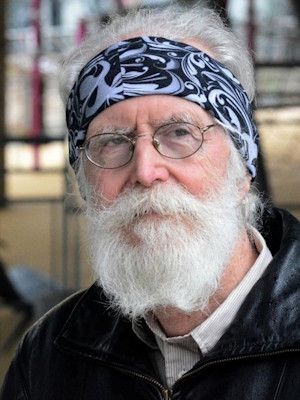
Michel Talagrand
Former Director of Research at the French National Centre for Scientific Research (CNRS)
Biography
Michel Talagrand is a French mathematician renowned for his profound contributions to probability theory, functional analysis, and their applications in mathematical physics and statistics.
Born in 1952, Talagrand has made transformative advances in the understanding of stochastic processes and high-dimensional phenomena. He is best known for developing the modern theory of concentration of measure, which reveals how, in high-dimensional spaces or systems with many independent random variables, measurable quantities tend to concentrate sharply around their expected values. This powerful principle has become a cornerstone of modern probability and has found wide applications across mathematics, computer science, statistics, and machine learning.
Among his most celebrated achievements is the completion of the mathematical foundation for the replica method in the theory of spin glasses — disordered magnetic systems first studied in physics. His rigorous proof of key predictions by Nobel laureate Giorgio Parisi in 2021 resolved long-standing challenges in the field and bridged probability theory with statistical physics.
Talagrand’s groundbreaking work on the suprema of stochastic processes, generic chaining, and isoperimetric inequalities has reshaped how mathematicians approach randomness in complex systems. His results are characterized by exceptional technical depth, elegance, and broad impact.
In recognition of his lifetime achievements, Michel Talagrand was awarded the 2024 Abel Prize, often described as the “Nobel Prize of Mathematics,” “for his groundbreaking contributions to probability theory and functional analysis, with outstanding applications in mathematical physics and statistics.”
He is a member of the French Academy of Sciences and has received numerous other prestigious honors, including the Loève Prize (1995), the Fermat Prize (1997), and the Shaw Prize (2019). Talagrand continues to be an influential figure in contemporary mathematics, known for his deep intuition and remarkable ability to uncover hidden order in seemingly chaotic probabilistic systems.
Among Talagrand's quotations:
"It helps to be humble and to start by understanding fully the simple situations"
"Mathematics gives you wings"
Plenary Talk Title: Concentration of Measure
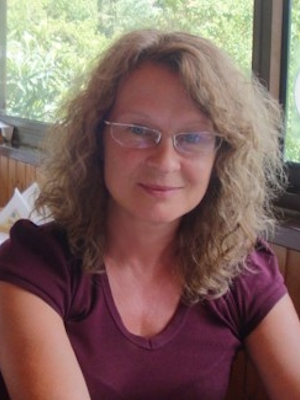
Catuscia Palamidessi
Director of Research (Classe Exceptionnelle) at INRIA
Biography
Catuscia Palamidessi is Director of Research (Classe Exceptionnelle) at INRIA and the leader of the Comète research team at INRIA, Saclay and LIX, École Polytechnique, France. Her research focuses on privacy, security, fairness in machine learning, differential privacy, quantitative information flow, concurrency theory, and probabilistic methods for security and AI.
She received her Ph.D. from the University of Pisa in 1988 and has held academic positions at the University of Genoa and Pennsylvania State University before joining INRIA. She is widely recognized for her contributions to information-theoretic privacy, and fairness in machine learning.
Plenary Talk Title: Towards Trustworthy AI
As Artificial Intelligence continues to integrate into the core fabric of society, establishing "trust" has evolved from a technical preference to an absolute necessity. This talk explores the core pillars required to build and maintain Trustworthy AI, focusing on the critical dimensions of privacy, fairness, explainability-interpretability. We will examine the technical and ethical challenges of protecting sensitive data and mitigating algorithmic bias, ensuring that AI systems respect individual rights and promote equitable outcomes.
Beyond these technical foundations, the presentation will address the broader societal ripples of the AI revolution. We will briefly examine pressing technological concerns and the socio-economic friction caused by workforce displacement as AI automates traditional roles. Finally, the talk will touch upon the AI alignment problem, namely, the critical challenge of ensuring increasingly autonomous systems remain aligned with human values and intent.
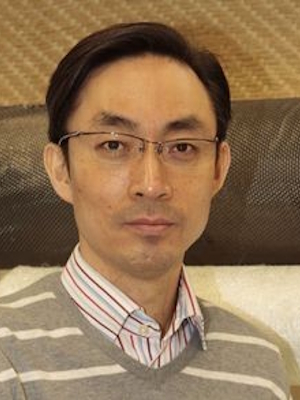
Park, Chung-Hae
Professor at IMT Nord Europe (Institut Mines-Télécom)
Biography
Chung-Hae PARK is a Full Professor at IMT Nord Europe (Institut Mines-Télécom), a position he has held since 2013. His research spans the full spectrum of fiber-reinforced polymer composites, encompassing manufacturing processes, numerical modeling and simulation, and material characterization. Before joining IMT Nord Europe (formerly called École des Mines de Douai), he held successive academic positions at the Université Le Havre Normandie from 2005 to 2013, progressing from Lecturer to Assistant Professor and then Associate Professor. Before his academic career, he worked as a Senior Researcher at LG Chem from 2003 to 2005.
Prof. Park holds a BSc, MSc, and PhD in Mechanical Engineering from Seoul National University. His doctoral work was distinguished by the award of a dual PhD from Seoul National University and École des Mines de Saint-Étienne, the first case of a dual PhD degree from Seoul National University. He also obtained the Habilitation à Diriger des Recherches (HDR) from Université Le Havre Normandie in 2011.
Prof. Park is one of two coordinators of the research theme "Advanced Materials and Ecomaterials," a collaborative initiative bringing together all the IMT schools, including IMT Nord Europe, IMT Mines Saint-Étienne, IMT Mines Alès, and IMT Mines Albi. He also serves as an evaluation expert for major French and European research bodies, including HCERES (Haut Conseil de l'Évaluation de la Recherche et de l'Enseignement Supérieur), ONERA (Office National d'Études et de Recherches Aérospatiales), ANR (Agence Nationale de la Recherche), the Research Council of Norway, Innoviris, Skywin, CFI (Canadian Foundation for Innovation) and Horizon Europe.
Plenary Talk Title: Successful preparation and application of Horizon Europe projects: the case of the ECOHYDRO project
Horizon Europe is the world's largest research and innovation funding program. Since joining as an associated member in 2025, the Republic of Korea has gained a valuable opportunity to engage in multinational collaborative projects, accessing complementary expertise from foreign partners that is often unavailable through Korean domestic funding schemes alone. However, competition among member countries is very intense, and newcomers like Korea often face a steep entry barrier due to limited experience in Horizon Europe project participation and a lack of established networks in Europe.
This talk presents a general procedure and practical tips for building a strong consortium and preparing a competitive proposal, from the perspectives of both coordinator and beneficiary. As a concrete illustration, the ECOHYDRO project, which I coordinate, involving 16 partners across 7 countries with a budget of €10 million (https://ecohydro-project.eu/), will be presented as a case study, covering lessons learned from consortium building, proposal writing, and project management.
Plenary Talks Timetable
Please see the detail timetable for the plenary talks.