
EKC2026
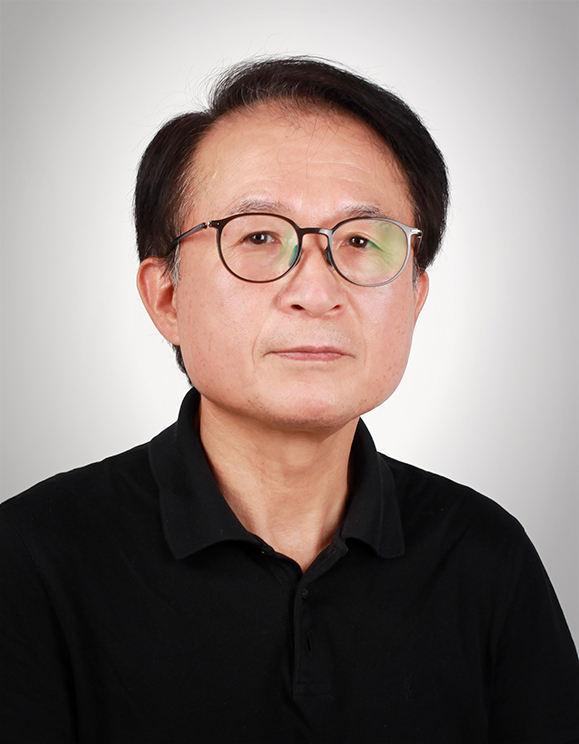
Lee, Jong-Wook
President of the Association des Scientifiques Coréens en France (ASCoF)
Dear distinguished guests and participants,
Fifty years ago, in 1976, the late Dr. Min Sun-shik founded the Association des Scientifiques Coréens en France (ASCoF). Inheriting his noble spirit, we are now gathered here in Toulouse, Southwestern France, for the 18th Europe-Korea Conference on Science and Technology (EKC).
I would like to express my deepest gratitude to our senior and junior colleagues who have contributed to the advancement of science and technology in our homeland, drawing upon their experiences in European universities and research institutes—the very birthplace of modern science since Descartes. We shall never forget the hidden sacrifices of our senior scientists and their families, who have maintained their pride as Korean researchers while serving as global leaders and role models for the next generation.
Now in its 18th year, EKC has successfully overcome the hiatus caused by COVID-19 and continues to evolve as a vital bridge between European and Korean science and technology. In line with Korea’s commitment to international collaborative research, this conference serves as a platform for cooperation among Korean scientists active across 11 member countries under 9 European associations, including those in Southern Europe. Furthermore, as the Republic of Korea officially joins Horizon Europe —the world's largest research funding program—as an Associate Member, EKC has solidified its position as a critical and practical networking hub for scientists and engineers.
The theme for EKC 2026 is "AI-Driven Future on Science & Technology". Artificial intelligence is an undeniable force in the evolution of technology. Supported by fundamental sciences, mathematics, quantum mechanics, physics, and engineering, AI will lead the global industries of the future. With the goal of becoming one of the world’s top three AI powerhouses, Korea is producing condensed, high-impact research results. This conference will be a venue for European and Korean scientists to share these achievements and engage in profound discussions.
Our host city, Toulouse, is the heart of Europe’s aerospace industry and R&D. Following the launch of the Korea AeroSpace Administration (KASA) two years ago, we expect active exchanges between Korean aerospace experts and their European counterparts right here in Toulouse. This city is home to global giants like Airbus and CNES, as well as prestigious universities and Grandes Écoles, all achieving excellence in their respective fields. Beyond science, Toulouse is a world-renowned travel destination, a charming city rich in history and cultural heritage.
The core of EKC lies in our General Sessions, featuring over ten specialized sections where hundreds of papers are presented via oral and poster sessions. For three days, more than ten parallel sessions will be led by session chairs to facilitate expert communication. In addition, many of the special sessions were organized by Korean research institutes and industries. Job fairs and on-site interviews for recruitment will also be expected. Additionally, various institutional industrial forums and a site visit to the Airbus assembly plant are scheduled.
Continuing our long-standing tradition of nurturing future scientists, the Science School program will visit Toulouse’s premier attractions, including:
• Cité de l'Espace (Space exploration)
• L'Envol des Pionniers / Aéroscopia (Aviation history and technology)
• Halle de la Machine (Mechanical systems and large-scale machines)
For our Social Family Day Tour, we have prepared two courses: Tour A to Albi and Tour B to Carcassonne (the famous French fortified city). Both locations are prestigious UNESCO World Heritage Sites.
Once again, welcome to Toulouse—a city beloved by young people around the world.
Thank you.
Lee, Jong-Wook
Chair of EKC2026
President of the Association des Scientifiques Coréens en France (ASCoF)
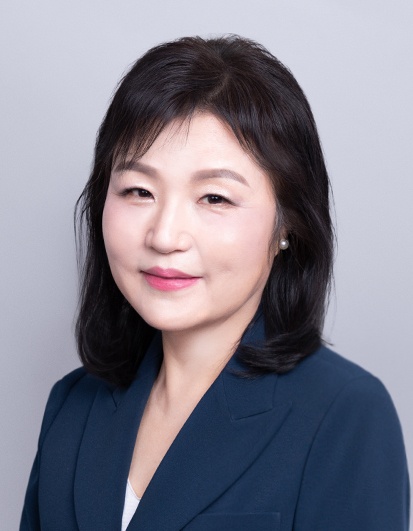
Kwon, Oh Nam
President of the Korean Federation of Science and Technology Scientists (KOFST)
Distinguished scientists and engineers from Korea and across Europe, and honoured guests,
It is my great privilege to welcome you to the 2026 Europe-Korea Conference on Science and Technology (EKC 2026).
Let me first express my sincere gratitude to President Lee, Jong-Wook and the members of the Association des Scientifiques Coréens en France — the Association of Korean Scientists and Engineers in France (ASCoF) — together with the presidents of the eight fellow Korean science and engineering associations across Europe, whose dedication has made this gathering possible.
I offer ASCoF my warmest congratulations on its 50th anniversary this year. Half a century after the late Dr. Min Sun-shik founded the Association in 1976, it stands as a steadfast bridge for scientific and technological exchange between Korea and Europe, and I hold its devotion in the highest regard.
Toulouse, where we are gathered, is often called the beating heart of European aerospace. Here, Airbus and world-renowned research institutions have turned humanity's boldest ambitions into reality.
It is also a city of romance and daring — the city from which Antoine de Saint-Exupéry, aviator and author of The Little Prince, once carried the airmail aloft. That we should now gather in this city, where seemingly impossible dreams have so often been made real through research and cooperation, to chart the future together is, to me, a source of profound meaning.
First convened in Heidelberg, Germany, in 2008, EKC reaches its 18th edition this year. Throughout, it has been a treasured forum in which the scientists and engineers of Korea and Europe share their achievements and seek out new possibilities for collaboration.
The bonds first forged here have grown into countless joint studies and innovations, contributing meaningfully to the advancement of science and technology in both Korea and Europe.
This year marks the 20th anniversary of the Korea-EU Agreement on Scientific and Technological Cooperation. Of particular note, Korea last year became the first nation in Asia to join Horizon Europe as an associate member — the hard-won fruit of cooperation patiently cultivated over many years.
Fittingly, this conference opens little more than a year after that accession.
The theme of this year's conference is "AI-Driven Future of Science and Technology.“
Artificial intelligence is already transforming, at a fundamental level, the methods and pace of research and the very structure of industry. Yet the more AI quickens our inquiry, the more it falls to us, as scientists and engineers, never to lose sight of the essential questions — where our technology ought to be directed, and why a given problem is worth solving at all.
Saint-Exupéry wrote, in Citadelle: "L'avenir, tu n'as point à le prévoir mais à le permettre" — the future is not ours to foresee, but ours to make possible.
So it is with the future of this AI age: it is not an object to be precisely predicted, but a possibility we must bring into being together, through responsible questions and shared endeavour.
At the very heart of these achievements have stood you — the Korean scientists and engineers who have devoted yourselves to research in laboratories around the world, and across Europe in particular.
Herein lies the meaning of the new vision that KOFST, in its 60th-anniversary year, has adopted: "Innovation through Resonance." When research that first sounds in separate places comes to resonate together across borders, a greater innovation is born — and you are the strongest link in that resonance.
May this EKC be more than an occasion for sharing results; may it become yet another point of departure from which Korea and Europe advance together toward new joint research and innovation.
Just as so many of humanity's dreams have risen into the skies above Toulouse, may a new endeavour take wing from our meeting here.
May our time together become a source of deep inspiration and of bonds that endure.
Thank you.
Kwon, Oh Nam
President of the Korean Federation of Science and Technology Societies (KOFST)